Exposure Triangle and other techniques - 30.09.22
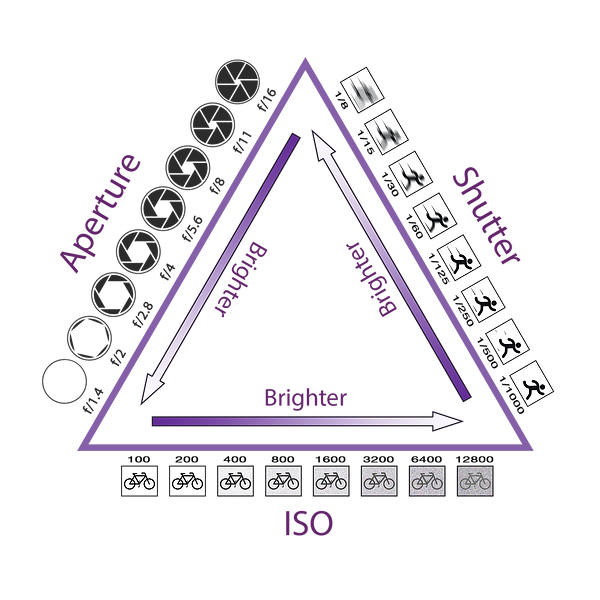
During this lesson, we talked about how the exposure triangle and how the ISO, shutter speed, and aperture change in conjunction with how it changes in the exposure triangle. The exposure triangle is shown below;
Aperature
With aperture, there are a couple of things to note. The first is the depth of field. The more open a len is, the more light there is, but the shallower depth of field is. When you stop down a lens (closing a lens up) there will initially be less light (which you counterbalance by either increasing the ISO or by decreasing how fast the shutter speed is), but this can allow a deeper depth of field in the image, which is shown below;
Depth of Field Explained: Ultimate Guide to Camera Focus [Shot List Ep. 4]

On the right, the image shows a telephoto lens that has an open aperture of f1.4, which has been opened to the largest aperture available. As you can see, this shows a very shallow depth of field, with both classmates being blurred out in the image. It also looks like it was shot on a constant ISO, but with the shutter speed being changed to keep the exposure the same throughout the experiment.
On the right, the depth of field is a lot deeper, with which you can now see both of my classmates within the frame of the photo. This was also taken with a slower shutter speed, as the ISO was constant throughout the experiment. This photo was also taken on the same telephoto lens, but the aperture stopped down to f16, which is the smallest aperture the lens had to offer.

Shutter Speed
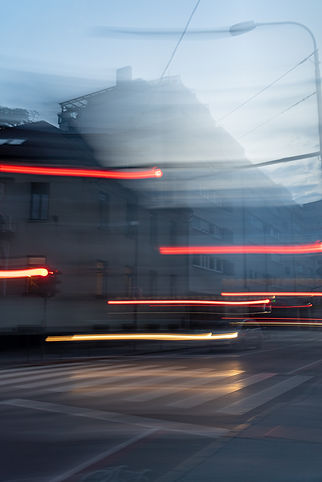
With shutter speed, this is how long the sensor/piece of film is exposed to the light. Increasing the speed of the shutter can enable us to show fast movement paused in the photo, whilst decreasing the shutter speed can make the movement show more in the image as a blur, also known as motion blur. Shutter speed can be used as a creative choice for the photographer or be unwanted imperfections within an image.
With this image, you can clearly see (or rather can't see) the details within, but I wanted to mainly focus on how I panned the camera from right to left to convey movement in the image. This shows clear use of shutter speed creatively.
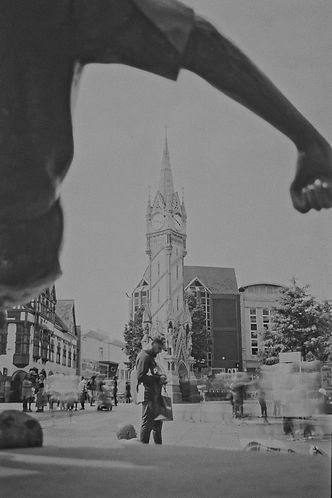
The shot on the right shows an example of when a shutter speed might be too slow for the subject at hand (pun intended). Focusing our attention on the hand of the subject, we can clearly see motion blur on the hand, as the shutter was too slow to make sure that the hand was clearer. I had to use this shutter speed, as a higher ISO would make the image noisy and the aperture of the lens that I had was not letting in enough light due to having a higher f stop at longer focal lengths.

ISO
ISO (or in full International Organisation for Standardisation) is used to determine a set of different sensitivities for either film or a set value for the sensor. Before ISO, there were many different standards of how sensitive a piece of film was, but now we have an international standard for this which has carried over to digital sensors as well.
For photography, ISO is used with either a high sensitivity or a low sensitivity. A low sensitivity (e.g. 100 or 200 ISO) is used when there is a lot of light going through the lens. But if there is not a lot of light outside or if shooting indoors or if you are using a fast shutter speed or a stopped-down lens, a higher ISO will be needed as there will not be enough light going through to the sensor/film.
The downside of increasing the ISO is the noise in the image. This can be seen as the image will start to either have pixels that do not have the correct colour from the image or by seeing a lot of grain in the image.
Jirsa, P. et al. (no date)
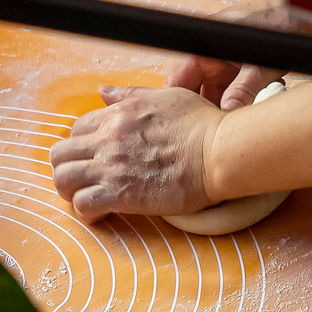
As shown in the photo, the hands cannot be seen due to the ISO needing to be so high. This shot was taken using a telephoto lens that had a very small opening at the maximum zoom, which was 240mm at f6.3. Coupled with being handheld (which means noticeable camera shaking when taking photos at slower shutter speeds) means that the ISO had to be boosted to about 6400. This shot was zoomed in to about 50% to show the noise in the image clearly.
Now heading over to the other end of the ISO spectrum, I managed to get my hands on some film called Super Positive Black and White slide film by the folks at Film Photography Project. This is a black and white slide film, which when developed as a normal black and white negative film, it will produce a slide positive! But, the downside (or upside, if you do like slow film) is that it is ISO 0.8. This means that the whole film is not very sensitive at all and will always need to be used with a slow shutter speed, open aperture on the lens and of course, a tripod (unless you're superhuman and can hold a camera for more than 3 seconds without it moving a lot)